Imu Mea ‘Ai Workshop (Traditional Hawaiian Earth Oven Experience)



The Imu Mea ‘Ai Workshop is led by Iopa, a Native Hawaiian cultural practitioner who learned the tradition of imu cooking directly from his father. For Iopa, this is not a performance or a reenactment. It’s a living cultural practice, passed down through family, and something he is deeply committed to sharing within the broader community. That commitment includes sharing the knowledge openly and respectfully with people outside Hawaiian ancestry who approach it with genuine interest and respect.
Overview
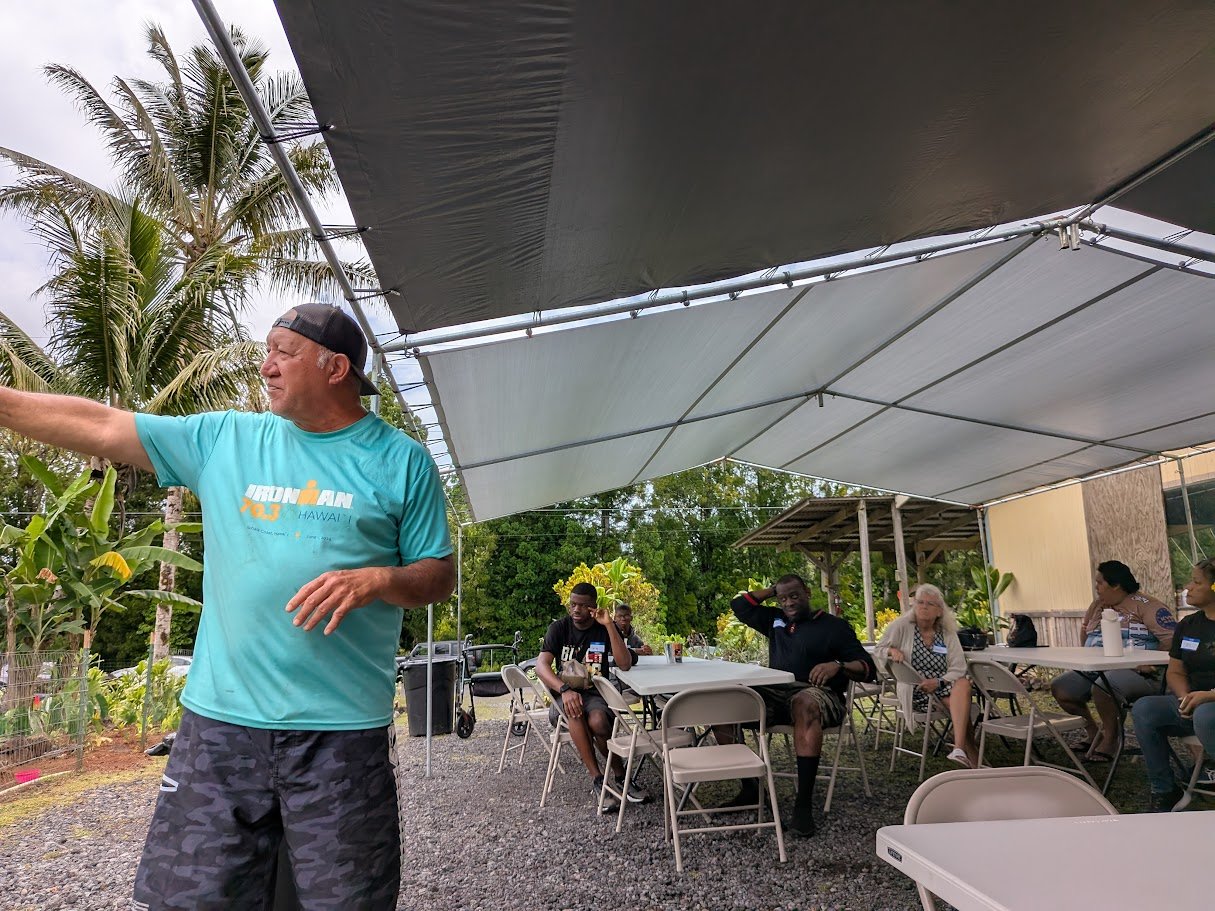
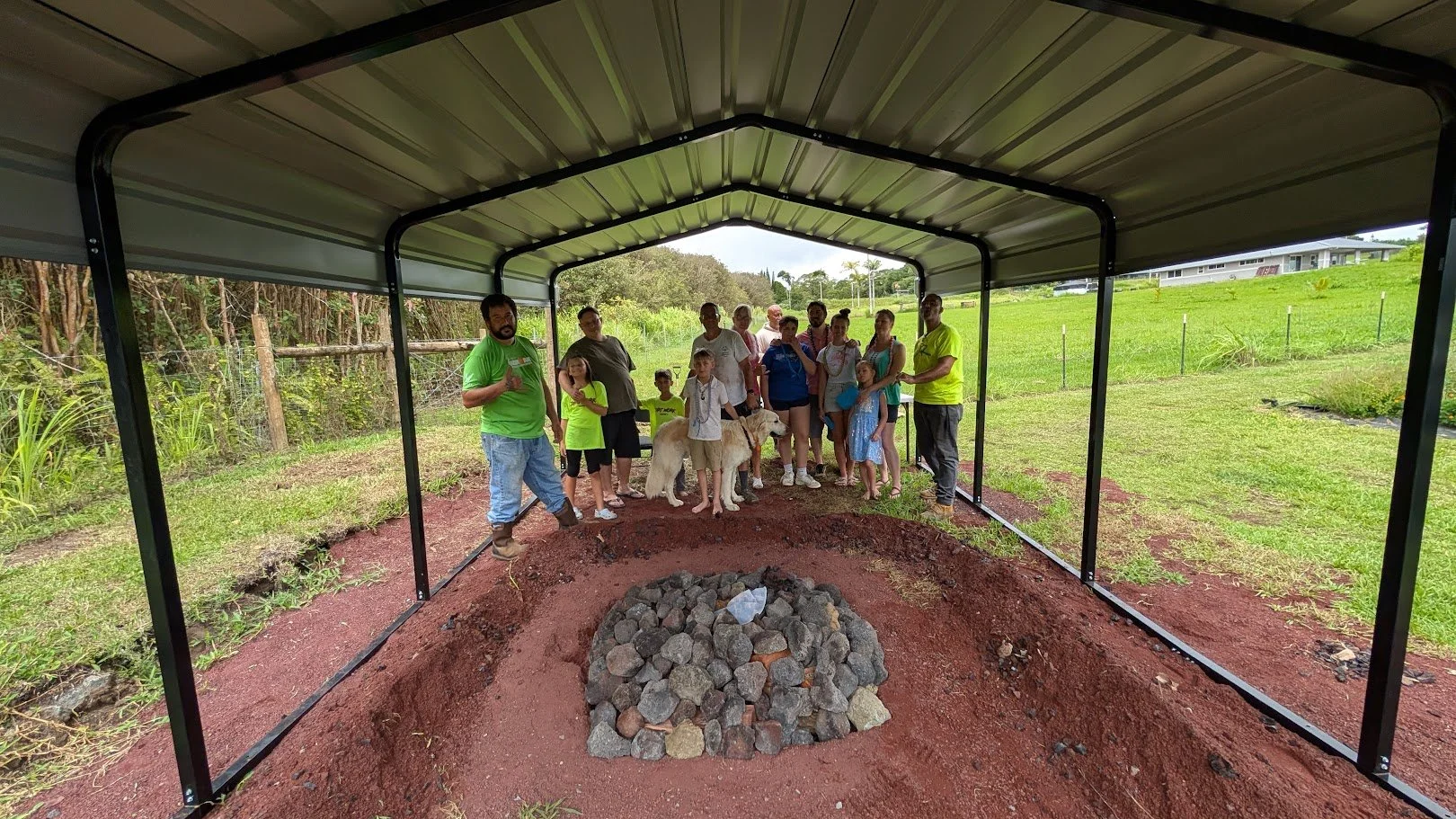
Iopa, through his work with the Men of Pa‘a, helped me set up my own imu on my property at Mahie Paradise Place. He was genuinely pleased to do so, not as a novelty, but as an extension of what he believes in: keeping the practice alive by teaching it, sharing it, and letting it be used as it was always intended, to bring people together around a shared meal.
That experience made something very clear. An imu is only used when you are cooking for a lot of people. It is not practical or symbolic for small groups. It exists specifically for large gatherings and communal celebration.
If, during someone’s trip, there is an opportunity for a large group gathering or celebration, we can host an imu ceremony at Mahie Paradise Place, drawing directly on the tradition and knowledge passed down through Iopa. This is not a staged event. It’s a working imu, built and used for its original purpose.
A Personal Connection
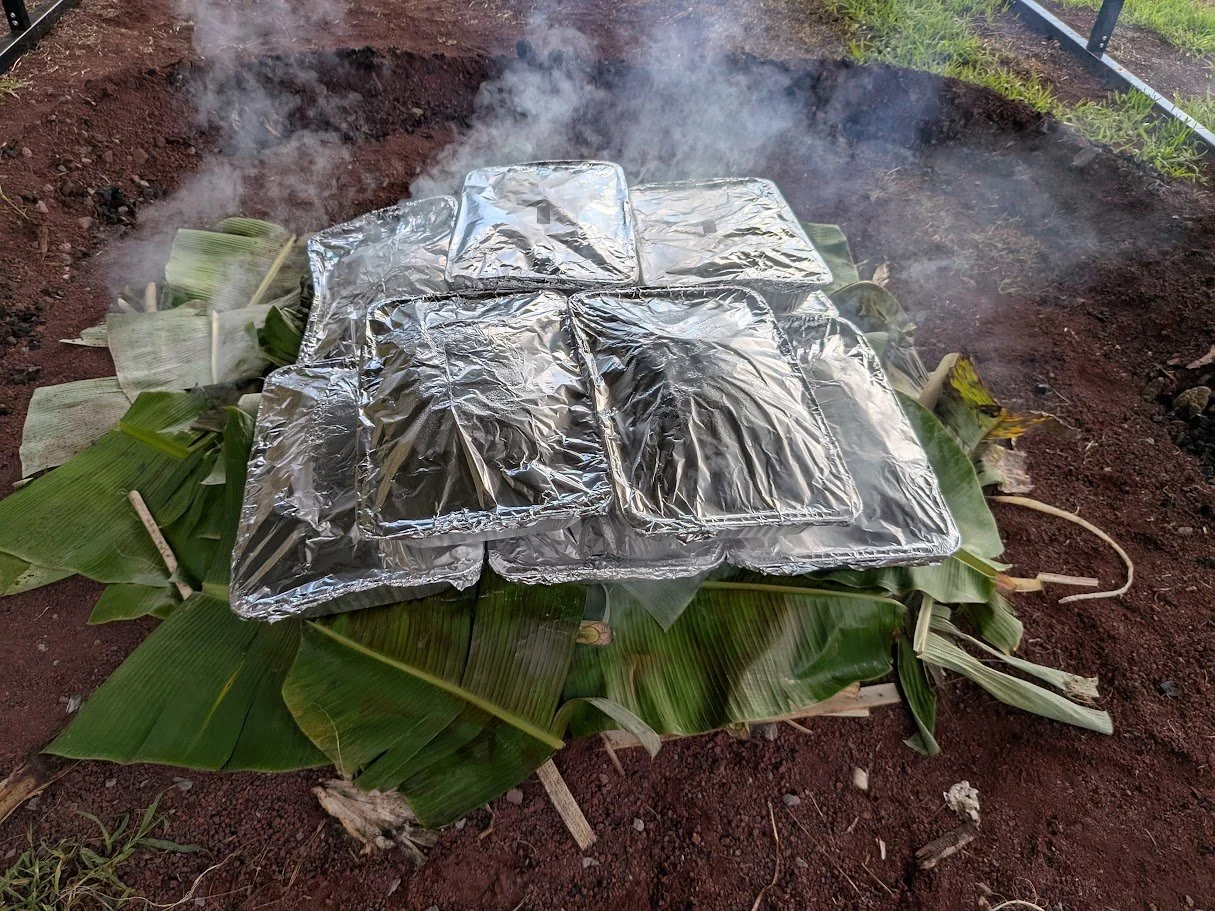
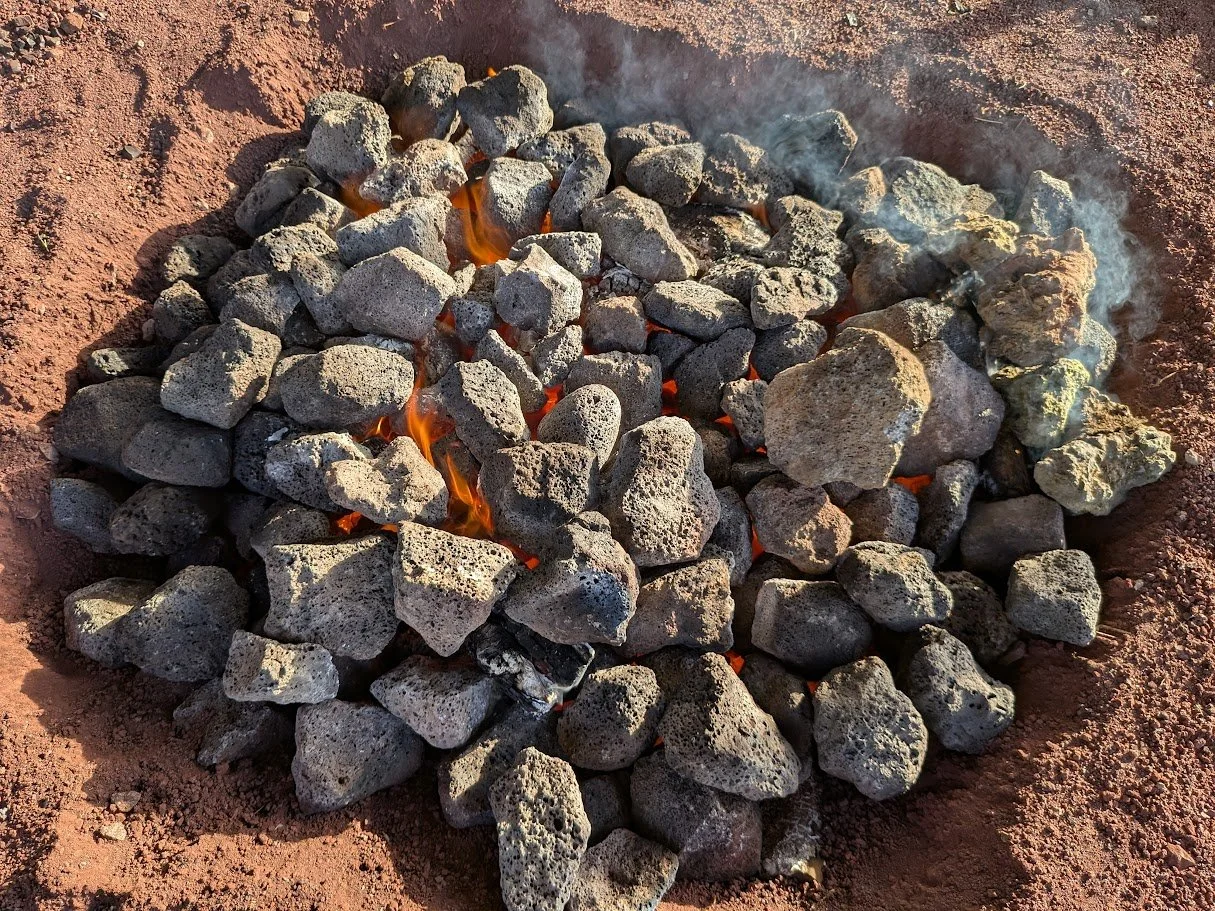
An imu is a traditional Hawaiian underground oven, dug into the earth, heated with lava rocks, and layered with green vegetation such as banana and ti leaves. Food, often whole pigs, taro, breadfruit, sweet potatoes, and fish, is placed inside and slow-cooked by steam and radiant heat for many hours. This method, commonly referred to as kālua, has been used in Hawaiʻi for centuries and was traditionally reserved for large gatherings, celebrations, and important communal events, not everyday meals.
The Imu Mea workshop is hands-on and participatory. Rather than simply watching, participants take part in the process, learning how an imu is prepared from start to finish. This includes selecting materials, understanding why each layer matters, and learning the cultural protocols that traditionally accompany imu preparation. The experience is intentionally educational, emphasizing context, history, and meaning, not just technique.
Cooking in an imu is about far more than food. Historically, it was a way to feed entire communities and reinforce social bonds. The labor is shared. The food is shared. The result is not just a meal, but a reaffirmation of ʻohana and connection to the land (ʻāina). That perspective is central to how Iopa presents the experience.
The Imu Mea ‘Ai Workshop is ideal for visitors who want more than a surface-level cultural experience. It offers a rare opportunity to participate in a living tradition, taught by someone who carries it personally and takes real care in how it’s shared.
For people interested in food, culture, history, and community, this is one of the most meaningful experiences available on the island.